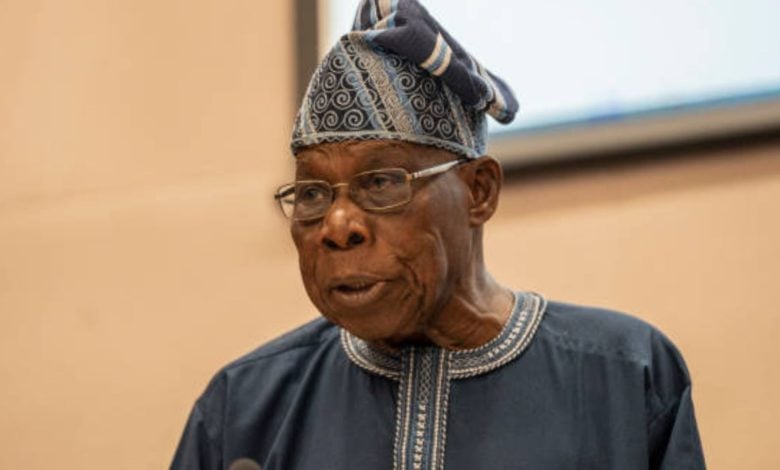
Former President Olusegun Obasanjo has launched a scathing critique against President Bola Tinubu’s economic policies, asserting that the sharp depreciation of the naira and the elimination of fuel subsidies have severely degraded the living standards of ordinary citizens.
Speaking at the Financial Times Africa Summit 2026 held in London, United Kingdom, the elder statesman argued that the swift policy shifts introduced since May 2023 have trapped the populace in deep financial distress, ultimately transforming Nigeria into the poverty capital of the world.
The 300% Devaluation Argument
Addressing international and regional leaders at the summit, Obasanjo highlighted the dramatic slide in the national currency, noting that the exchange rate plummeted from roughly N500 to N1,500 against the US dollar.
“We do not live in isolation as a country. We interact with the rest of the world. And overnight, you devalue the currency by 300 per cent… What that meant was that every Nigerian is made poor by 300 per cent,” Obasanjo stated.
He maintained that the resulting loss in purchasing power has made it exceedingly difficult for households and business owners to cope with escalating market prices for food, transportation, and basic essentials. Dismissing assertions that the current administration requires more time for its structural adjustments to yield positive outcomes, the former president remarked that he sees no visible indicators of national economic recovery.
Scrutinizing the Fuel Subsidy Removal.
Obasanjo also focused heavily on the termination of the petrol subsidy—one of the most contentious pillars of the current administration’s agenda. While acknowledging that energy costs fundamentally influence manufacturing, supply chains, and public transit, he argued that the government erred by shifting the full financial weight onto citizens before cleaning up systemic corruption within the subsidy framework.
According to the former leader, any country navigating acute economic turbulence must aggressively minimize government waste, cut down on extravagant spending, and aggressively expand domestic production.
The Federal Government’s Position
In contrast, the Tinubu administration has consistently defended its reform trajectory as an unavoidable prescription for correcting decades of macroeconomic distortions, curbing public debt, and stimulating foreign investment.
Government officials have maintained that cutting the petrol subsidy has generated significant fiscal savings—with the Ministry of Finance reporting tens of trillions saved over the initial implementation phases—which are intended to be channeled into critical infrastructure and social safety nets. However, balancing macro-fiscal savings with immediate household survival remains a central point of contention across Nigeria’s political and economic landscape.
About the Author