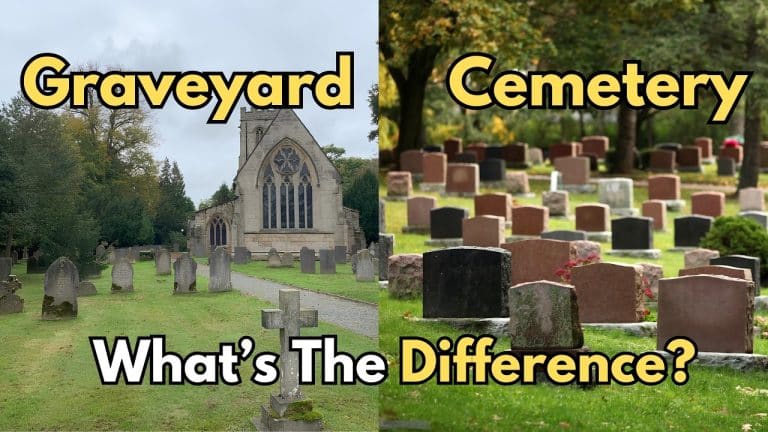
While the terms are often used interchangeably in everyday conversation, a graveyard and a cemetery are two distinct types of final resting places with unique historical, religious, and operational differences. Understanding what sets them apart sheds light on how societies have historically honored their dead and managed memorial spaces.
1. Affiliation and Ownership
Graveyards: A graveyard is strictly a burial ground associated directly with a church or religious institution. Historically located immediately adjacent to a church building, graveyards were traditionally consecrated ground reserved exclusively for members of that specific religious community or parish.
Cemeteries: In contrast, a cemetery is a secular burial ground independent of any specific church or religion. Cemeteries are typically owned and operated by local municipal governments, private corporations, or non-profit organizations, and they are open to individuals of any faith, belief system, or background.
2. Origins and Location
The word “cemetery” comes from the ancient Greek term *koimeterion*, meaning “sleeping place,” reflecting a view of the land as a peaceful plot set apart for the public. Cemeteries are usually larger, sprawling plots of land located away from urban religious centers—a shift that began during the 19th century public health movements when urban church graveyards became overcrowded. Graveyards, by design, remain tightly linked to their mother church.
3. Purpose and Atmosphere
Graveyards: These spaces function primarily as sacred extensions of religious worship. They provide a holy sanctuary where members of a congregation gather to connect with their faith and pay respects to community members.
Cemeteries: Designed primarily as practical, orderly civic spaces, modern cemeteries accommodate diverse burial practices. While they remain places of remembrance and solace, they are structured to serve the broader public efficiently.
4. Burial and Memorial Options
Graveyards: Because of their traditional layout and direct ties to church grounds, burials in a graveyard typically consist of traditional in-ground earth plots marked by headstones or markers.
Cemeteries: Offering much greater architectural and logistical flexibility, cemeteries often feature traditional ground plots alongside specialized memorial options. These include above-ground mausoleums, garden crypts, and columbaria—structures designed specifically to hold cremation urns.
5. Maintenance and Administration
Graveyards: The upkeep and groundskeeping of a graveyard typically fall directly upon the affiliated church or religious organization, managed as part of parish property.
Cemeteries: Maintenance responsibilities vary depending on the facility. Professional management staff, municipal workers, or private grounds crews usually oversee the general landscape, while families often coordinate specific headstone upkeep or memorial arrangements based on cemetery regulations.
Despite their operational and structural differences, both graveyards and cemeteries serve an essential role in society. They offer a dignified final resting place for the deceased, provide peace and solace for grieving families, and serve as invaluable historical archives preserving local heritage through generations of headstones and memorials.
About the Author