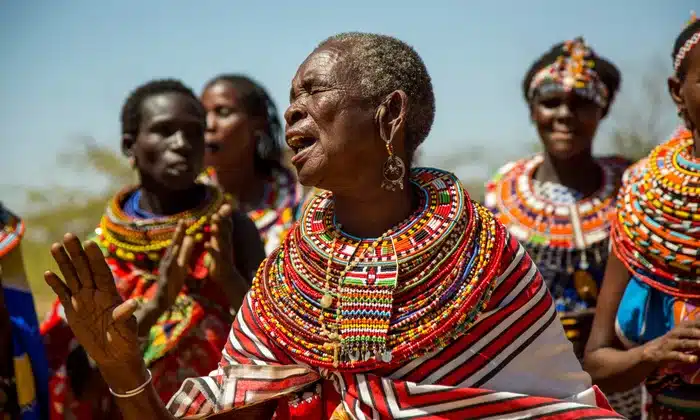
Imagine a community where women make every decision, collectively raise their children, run businesses, and live entirely free from male dominance. While it sounds like a concept from fiction, this unique society is a living reality in East Africa.
Nestled in the arid landscape of Samburu County, northern Kenya, lies **Umoja**—a settlement famously known as the village where men are not permitted to reside. Established in 1990 by a visionary woman named Rebecca Lolosoli alongside 14 other founding members, the community was born out of profound necessity. Many of the early residents fled severe domestic abuse, child marriage, cultural marginalization, and systemic violence.
Why Umoja Was Created
In traditional Samburu culture, women historically faced deep marginalization, lacking rights to own property, land, or livestock. Furthermore, widespread cultural practices such as female genital mutilation (FGM) and forced child marriages left countless young girls trapped in cycles of abuse.
Seeking an alternative to a system that offered little protection, these women pooled their courage to create a safe haven. Although commonly referred to as a “men-free” zone, the intention behind Umoja was never about hostility toward men. Instead, it was designed as a protective sanctuary for survivors of trauma, giving them space to heal, govern themselves, and raise their children with dignity.
Financial Independence and Economic Survival
Sustaining an all-female community requires immense resilience, and the women of Umoja have built a thriving self-reliant economy.
Traditional Craftsmanship: The residents are widely known for crafting intricate, colorful traditional beaded jewelry. These handmade pieces are sold to travelers, tourists, and through cultural centers.
Ecotourism: Umoja has evolved into a major attraction for international travelers visiting northern Kenya. Visitors pay a modest entrance fee to tour the village, learn about Samburu heritage, and support local micro-enterprises.
Collective Taxation: A portion of the revenue generated from crafts and tourism is funneled back into a community fund, which finances local schooling, food security, and collective upkeep.
A Legacy of Strength and Global Inspiration
Decades after its humble beginnings with just 15 women, Umoja has blossomed into a symbol of empowerment. It provides an educational environment for children and a blueprint for female autonomy that stretches far beyond the borders of Kenya.
By rewriting the rules of social structure, the women of Umoja have proven that unity, economic self-reliance, and mutual support can conquer adversity. Their journey stands as an enduring testament to the fact that every individual deserves a life defined by safety, freedom, and self-determination.
About the Author