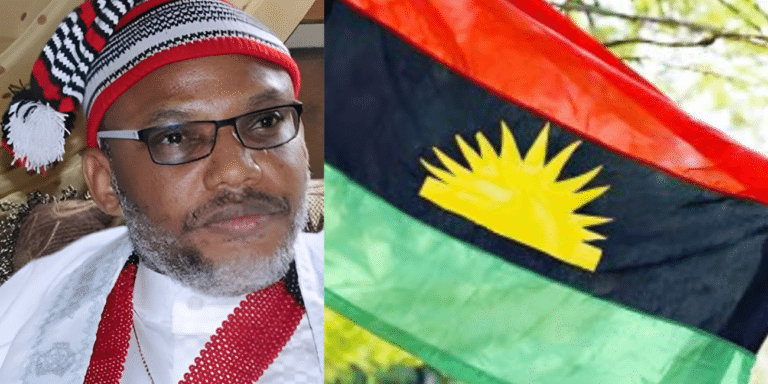
The leader of the Indigenous People of Biafra (IPOB), Mazi Nnamdi Kanu, has leveled serious accusations against the Nigerian government, alleging a deliberate state infiltration of the movement’s high command.
In a direct message addressed to the American Veterans of Igbo Descent (AVID) during their annual convention in Duluth, Georgia, USA, Kanu revealed that internal security breaches necessitated a total overhaul of the organization’s administrative arm.
Cracking Down on Infiltration and Betrayal
Addressing supporters, Kanu disclosed that the third administration of the group’s Directorate of State (DOS) was compromised by external state forces, causing widespread confusion among the global membership.
> “When the Nigerian government succeeded in penetrating the Third Administration of our Directorate of State, many who once spoke loudly fell silent, or worse, became instruments of confusion,” Kanu stated.
> As a corrective measure, the IPOB leader confirmed that the compromised administration has been entirely dissolved. Members accused of selling out the movement’s core interests have been formally sacked and expelled from the global family.
This restructuring follows earlier actions taken to rebuild public confidence, which included the inauguration of a new leadership tier headed by US-based Chris Nwaogu Mazi, while retaining Emma Powerful as the chief spokesperson.
Solidarity from Diaspora Veterans
During the convention, Kanu heaped praises on AVID—led by Dr. Sylvester Onyia—alongside groups like Rising Sun and Ambassadors for Self-Determination, for standing by him through thick and thin. He commended Dr. Onyia for personal sacrifices, noting regular visits to court hearings in Abuja and offering vital support during challenging medical checkups.
“You did not advocate from a safe distance,” Kanu remarked, praising the resilience of the diaspora veterans who refused to let internal storms fracture their loyalty.
A Firm Stance on Referendum
Looking forward, Kanu shut down speculations regarding political compromises that bypass the core agenda of self-determination. Reiterating his rigid stance from detention, he maintained that he would only engage in structured dialogue if it strictly centered on a sovereign referendum.
“I am not available for any bargain that leaves Biafra unnamed,” Kanu declared. “I am available for a referendum.”
He urged global supporters and international allies not to grow weary, calling for sustained advocacy for his freedom as well as the immediate release of other activists currently held in detention.
About the Author